
 Historic Castle
Khormuj Castle
A Qajar architectural landmark in the heart of Dashti
- Historic Castle
- Bushehr, Bushehr
- Altitude 53 m
- Ability level Beginner
Ability level:
Beginner
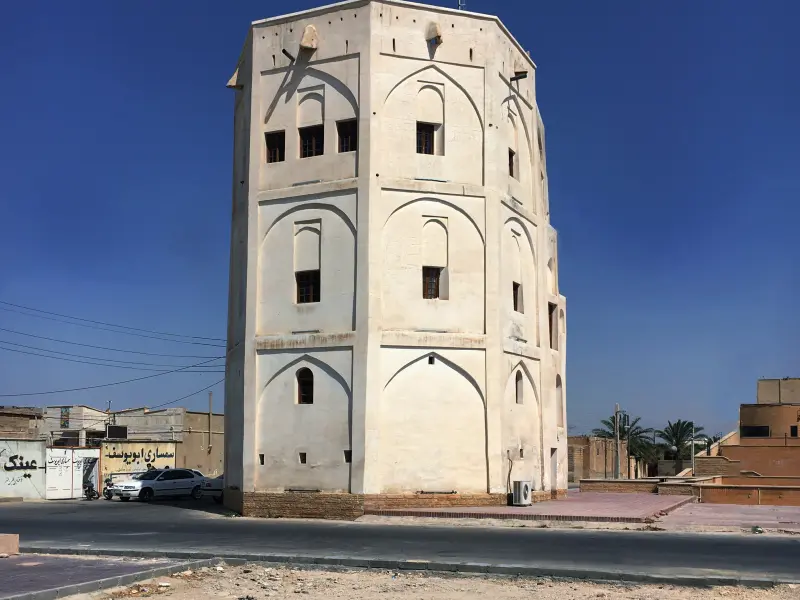
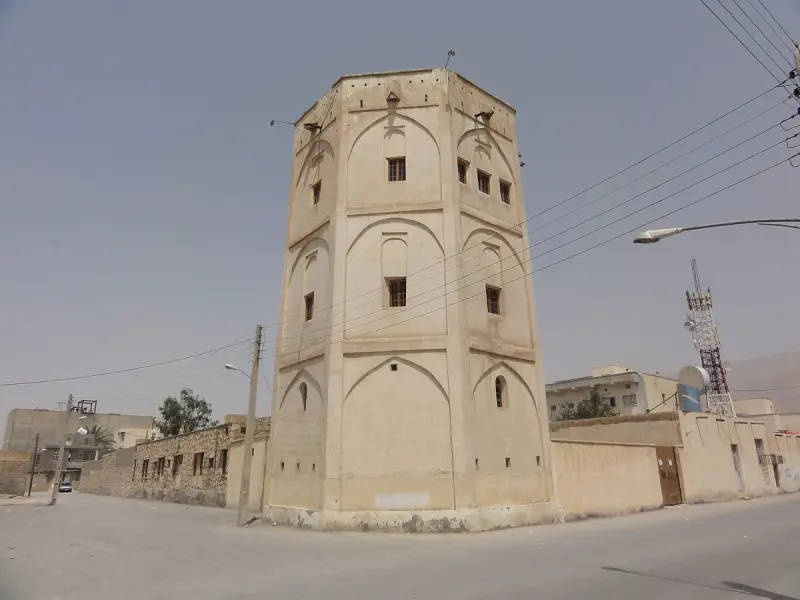
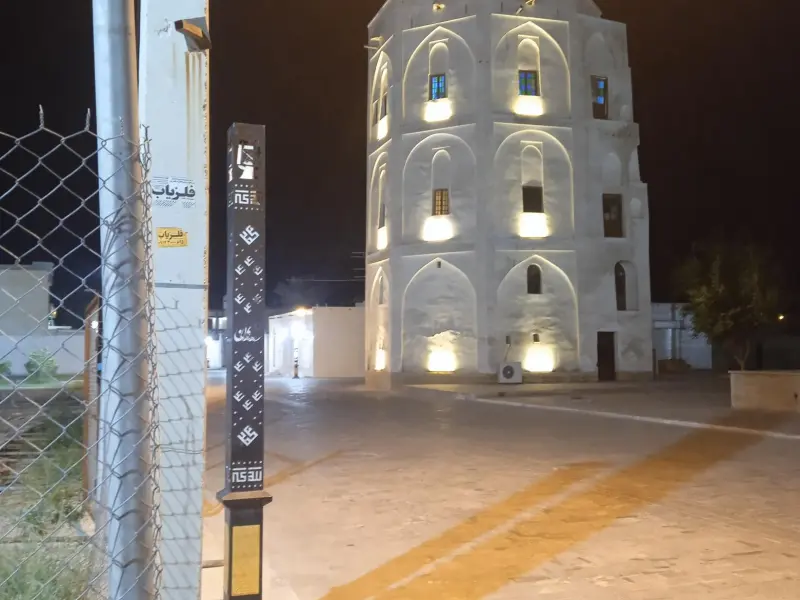
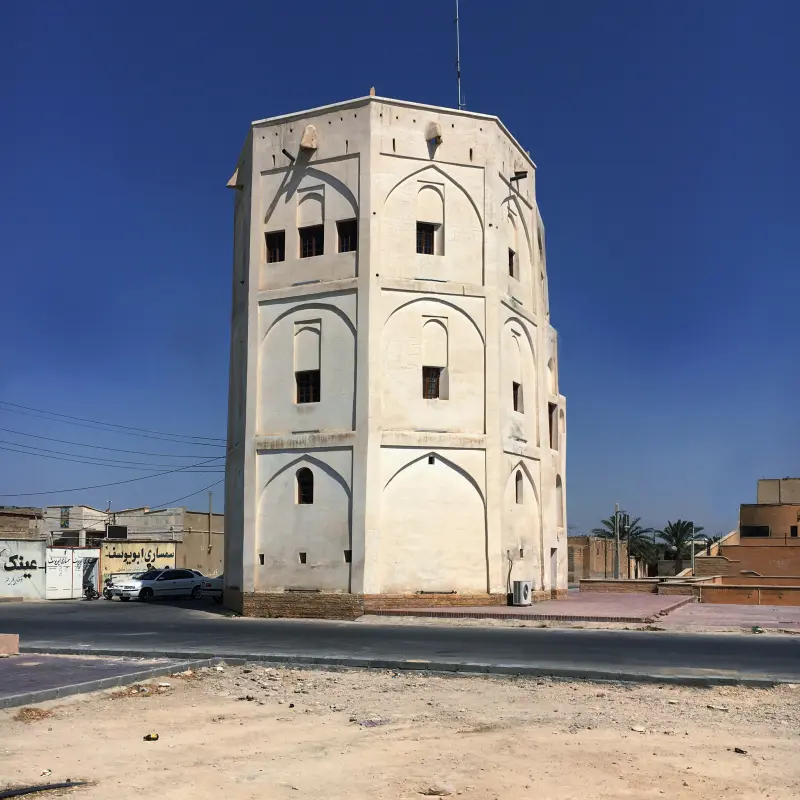
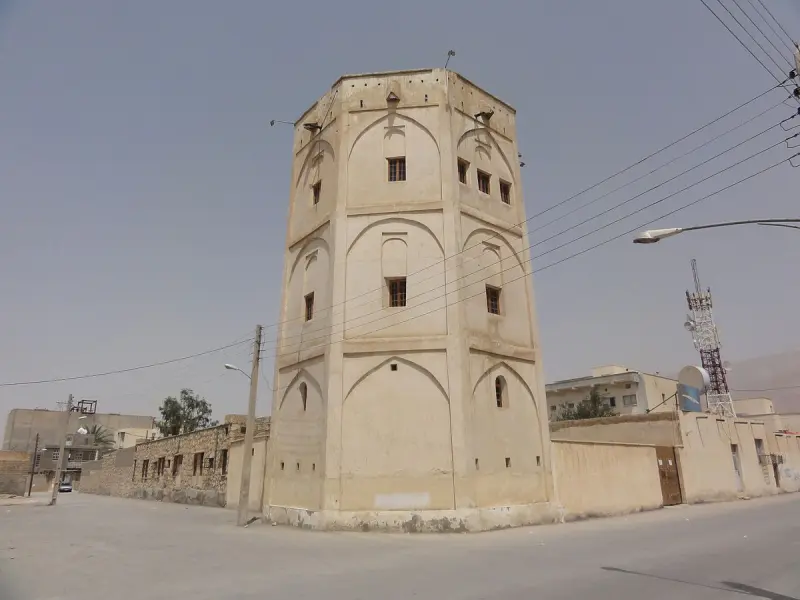
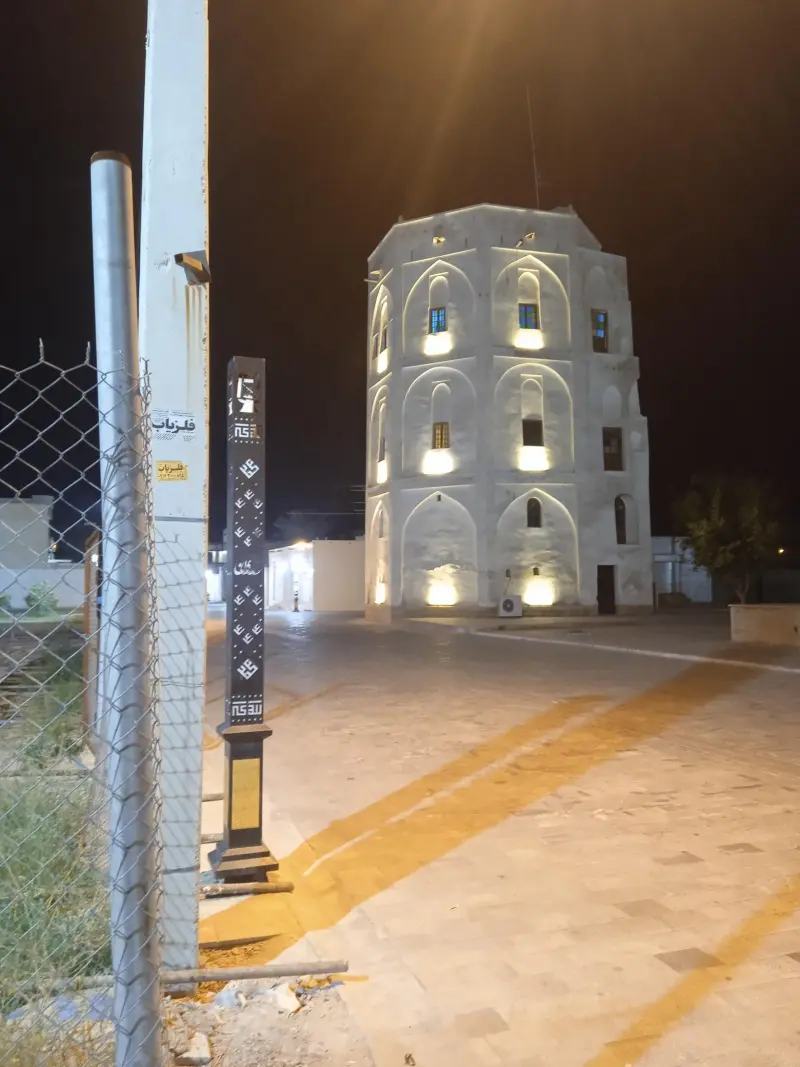
Khormuj Castle, also known as Mohammad Khan Dashti Castle, stands in the city of Khormuj, the capital of Dashti County in Bushehr Province, and is regarded as one of the best-known historical buildings in southern Iran. Once one of the largest castles in the Bushehr region, it was built in the Qajar period. One part of it was known as Mohammad Khan Dashti Castle and the other as Jamal Khan Castle. The complex originally had four walls, four towers, private quarters (andaruni), a central mansion, a guardhouse and a stable. In 1977 (1356 SH), however, much of it was demolished to make way for the municipality building, the telecommunications office and the public library, and today only the Jamal Khan Tower remains. Despite the damage and demolition it has suffered, Khormuj Castle is still one of the city's important historical monuments, and in 2000 (1379 SH) it was inscribed on the Iran National Heritage List under registration number 3032.
The surviving tower has three floors and a basement, and its design pays careful attention to architectural symmetry. The basement ceiling is built as a dome, and this domed pattern continues in other parts of the building; on the first floor, decorative patterns were also added to the ceiling. The castle's architecture combines features of the Qajar period with influences from Sasanian and Seljuk building styles, and the blind arcades and stucco work on the walls and in the rooms are among its most distinctive elements. Seljuk influence can be seen in areas such as the royal alcove (shahneshin) and the gooshvareh (ear-shaped) ornaments, while Sasanian influence is visible in the way the fortress was built and in some of the decoration. Architects from Shiraz and Isfahan were employed to build parts of the structure, and the guardhouse and guesthouse were built with Italian and Safavid influences. In the past the castle had two entrances: a large gate for riders and vehicles, and a smaller one, called a "chileh", for people on foot. A spring also flowed near one of the entrances, and a Qajar-era bathhouse was built beside it.
Khormuj Castle is located within the city of Khormuj, on Shahid Motahhari Street, and can be reached by city streets. Because of the region's hot climate, the cooler seasons are the best time to visit and explore around this historic building, and you can combine your visit with a walk through other historic parts of Khormuj. While visiting, please avoid touching or damaging the stucco work and surviving architectural elements, entering protected areas, or leaving litter on the site, and stick to the designated visitor routes to prevent further damage to the remains of this historic monument.
Written by زهرا لنگری Last updated
Activities
What you can do here, and what it takes
-
Walking
معابر اطراف قلعه در محدوده شهری خورموج برای پیادهروی سبک و گشتوگذار در اطراف بنای تاریخی مناسب هستند.
Specifications
Introduction of the location and specifications of Khormuj Castle
Construction Period:
Qajar era
Location:
Bushehr, Bushehr
Coordinates:
28.65590121, 51.37560370
Open in maps
Height above mean sea:
53 meter
Transports:
Private car, Minibus, Bus
Tourist Attractions in Bushehr
Attractions that are nearby



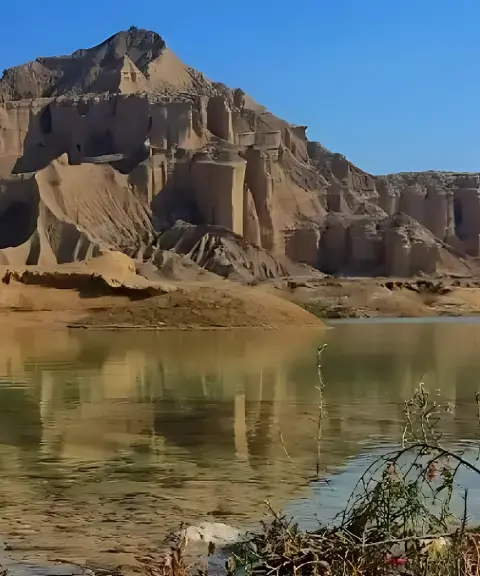
Kalut Bujir
Province Bushehr
- Walking
A combination of kaluts and a wetland near Bandar Mohammad Ameri

Related tags:
Unfortunately, no comments have been registered.